Category Archives: Literature

Review: Mission at Nuremberg

Mission at Nuremberg: An American Army Chaplain and the Trial of the NazisMission at Nuremberg: An American Army Chaplain and the Trial of the Nazis by Tim Townsend
My rating: 5 of 5 stars

Mission at Nuremberg is the story of Henry Gerecke, a Lutheran pastor and US Army chaplain and his ministry to the Nazis who were tried as war criminals at Nuremberg. I found this book fascinating because it works on many different levels. It is a biography of Pastor Gerecke of course, but it is also an account of the Nuremberg War Crimes Trials from an unusual viewpoint: that of the pastor who tried to reconcile the accused with God. There are biographical sketches of most of the Nazis and enough history to put the charges against them into context. But the book also contains interesting discussions of theology; for example the theology of forgiveness in both Judaism and Christianity. It’s a very unusual book and well worth reading.

View all my reviews

Review: Life among the Lutherans

Life Among the LutheransLife Among the Lutherans by Garrison Keillor
My rating: 4 of 5 stars

Life Among the Lutherans is a collection of stories by Garrison Keillor. They were written over a number of years – some come from Lake Woebegone Days while some are significantly more recent. All of the stories deal with the people of Lake Woebegone and more often than not, something that involves Pastor Ingqvist or the Lutheran Church. It’s a very easy read; you can read a chapter or two and set the book down for a couple of weeks and then come back to it. I really enjoyed the book, but if you’re not a fan of Lake Woebegone, your mileage may vary.

View all my reviews

Review: The Wars of the Roses

The Wars of the Roses: The Fall of the Plantagenets and the Rise of the TudorsThe Wars of the Roses: The Fall of the Plantagenets and the Rise of the Tudors by Dan Jones

My rating: 4 of 5 stars

The Wars of the Roses is a continuation of the authors previous work “The Plantagenets.” In this volume we trace the story of the Plantagenet dynasty from the deposition of Richard II in 1399 to the death of Richard III at the Battle of Bosworth Field in 1485, and beyond that to the reign of Henry VII and the advent of the Tudor dynasty. Both the Lancastrian and Yorkist kings were Plantagenets; the two branches of the family traced their ancestry back to different sons of Edward III. When Henry IV deposed his cousin Richard II and brought the Lancastrians to power, the potential was created for a civil war because Henry did not necessarily have the best claim to the throne. The potential was realized in the reign of his grandson Henry VI who as the author points out was not capable of ruling the kingdom or of choosing advisers to rule it for him. The reign of this weak king opened the door to civil war, the rule of the three Yorkist kings and eventually Henry Tudor.

The author does a good job of discussing the triumphs of the Lancastrian and Yorkist kings as well as their disasters. His narrative is easy to follow. Most histories of this period end with the death of Richard III, but the author takes us through the reign of Henry VII and Henry VIII as well. I thought this was a little unusual, but it provides a nice balance to the story. The author is also pretty even handed in terms of York and Lancaster, so there is no obvious bias, and he has made use of the recent findings concerning Richard III. The one thing that is missing, in my opinion, is the story of Henry IV. His usurpation of the throne in 1399 sets the whole story in motion, but his rule is not discussed in any detail.

View all my reviews

Review: The Plantagenets

The Plantagenets: The Warrior Kings and Queens Who Made EnglandThe Plantagenets: The Warrior Kings and Queens Who Made England by Dan Jones
My rating: 4 of 5 stars

This is another re-telling of the story of the Plantagenet dynasty and my short review is that it is well-written and a pleasure to read. The Plantagenet story begins with the succession crisis in the reign of Henry I. After the death of his son, Henry attempts to have his daughter Matilda (who is married to Geoffrey Plantagenet) recognized as his heir. Naturally this does not go according to plan, and Matilda’s cousin Stephen usurps the throne, leading to a long struggle. Eventually there is a negotiated peace by which Matilda’s son Henry becomes king after Stephen’s death in 1154. Henry II is the first Plantagenet king, followed by Richard I, John, Henry III, Edward I, II and III and Richard II.

The book stops with the deposition and death of Richard II, though this is not really the end of the House of Plantagenet story – the rival Houses of York and Lancaster are also descendants of Edward III. But this is a convenient place to pause. The author has written another book in which the story of the Lancaster and York branches of the family is continued.

The book is an easy read, but it focuses very much on the fortunes of the Plantagents, and so it is not a broad history of medieval England. It covers roughly the same ground as three of the books by Thomas Costain: “The Conquering Family”, “The Magnificent Century” and “The Three Edwards”.

View all my reviews

Review: The Runner’s Rule Book

The Runner's Rule Book: Everything a Runner Needs to Know - And Then SomeThe Runner’s Rule Book: Everything a Runner Needs to Know – And Then Some by Mark Remy
My rating: 4 of 5 stars

A short and humorous look at some of the “rules” that every runner knows or should know. Granted some of the rules are just the author’s opinions, but I like this book because it encapsulates a lot of the wisdom (for lack of a better word) that an experienced runner accumulates over the years. If you’re a runner, I think you’ll find it an enjoyable book to read and perhaps re-read every couple of years.

View all my reviews

Review: The Runner’s Field Manual

The Runner's Field Manual: A Tactical (and Practical) Survival GuideThe Runner’s Field Manual: A Tactical (and Practical) Survival Guide by Mark Remy
My rating: 4 of 5 stars

This is a follow-up of sorts to the author’s previous book “The Runner’s Rule Book.” This book is not quite as humorous as the previous work but it does contain a lot of useful advice for both new and experienced runners. It’s definitely worth reading and it does make a handy reference book, but if you’re looking for humor, “The Runner’s Rule Book” is the better choice.

View all my reviews

Review: The King’s Grave

The King's Grave: The Discovery of Richard III's Lost Burial Place and the Clues It HoldsThe King’s Grave: The Discovery of Richard III’s Lost Burial Place and the Clues It Holds by Michael K. Jones

My rating: 3 of 5 stars

I really wanted to like this book more than I actually did. Certainly I don’t regret reading it and it was interesting, but it’s just not a well-constructed telling of the story. Basically it combines a biography of Richard III of England with the story of the excavation of his burial place beneath a parking lot in Leicester. The narrative device of alternating between the two stories works at first, but becomes increasingly irritating. Richard III is a very polarizing figure in late medieval English history and both authors are Richard III partisans, yet they do not whitewash his story. Both sides are presented. It’s an interesting book and I’m glad I read it, but the structure of the narrative is a problem.

View all my reviews

Review: Goering

Goering: The Rise and Fall of the Notorious Nazi LeaderGoering: The Rise and Fall of the Notorious Nazi Leader by Roger Manvell

My rating: 4 of 5 stars

This is a very good introductory level biography of Hermann Goering; it was first published in 1962 and utilizes many primary sources. While it remains a valuable character study of Goering as a person and a leader, some of the descriptions of historical events have been overtaken by more recent research. Still, I think it is worth reading, particularly for an insight into Goering’s character and the role he played in the rise of the Nazi Party.

View all my reviews

It is what it is

I came across this poem a few days ago while looking up the origin of the now common
saying “it is what it is.” In the course of my search I found this poem by Erich Fried, which is apparently the first occurrence of the saying (though in German of course) and I enjoyed it. The poem was originally published in 1983. I’ve added my English translation below.

Was es ist

Es ist Unsinn
sagt die Vernunft
Es ist was es ist
sagt die Liebe

Es is Unglück
sagt die Berechnung
Es ist nichts als Schmerz
sagt die Angst
Es ist aussichtslos
sagt die Einsicht
Es ist was es ist
sagt die Liebe

Es ist lächerlich
sagt der Stolz
Es ist leichtsinnig
sagt die Vorsicht
Es ist unmöglich
sagt die Erfahrung
Es ist was es ist
sagt die Liebe

Erich Fried: Es ist was es ist. Liebesgedichte, Angstgedichte, Zorngedichte. Wagenbach, Berlin 1996

English Translation
What it is

It is nonsense
says reason
It is what it is
says love

It is misfortune
says calculation
It is nothing but pain
says fear
It is hopeless
says insight
It is what it is
says love

It is ridiculous
says pride
It is careless
says caution
It is impossible
says experience
It is what it is
says love

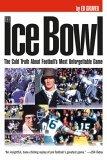
The Ice Bowl

More about The Ice BowlI was inspired to read this by the weather conditions as the Packers host the 49ers in an NFC Wildcard game. It’s not quite as cold in 2014 as it was back in 1967, but it still very cold to be playing football outdoors!

I was 10 years old in 1967 and remember the Ice Bowl vividly. I like this book a lot: it’s not overly long, it discusses the 1967 season in some detail to provide context, and best of all, it has diagrams of some of the key plays during the game to go along with the narrative. I’ve found a couple of minor inaccuracies with some of the background information, but it’s still a great read.