Category Archives: Literature

Review: The Plantagenets

The Plantagenets: The Warrior Kings and Queens Who Made EnglandThe Plantagenets: The Warrior Kings and Queens Who Made England by Dan Jones
My rating: 4 of 5 stars

This is another re-telling of the story of the Plantagenet dynasty and my short review is that it is well-written and a pleasure to read. The Plantagenet story begins with the succession crisis in the reign of Henry I. After the death of his son, Henry attempts to have his daughter Matilda (who is married to Geoffrey Plantagenet) recognized as his heir. Naturally this does not go according to plan, and Matilda’s cousin Stephen usurps the throne, leading to a long struggle. Eventually there is a negotiated peace by which Matilda’s son Henry becomes king after Stephen’s death in 1154. Henry II is the first Plantagenet king, followed by Richard I, John, Henry III, Edward I, II and III and Richard II.

The book stops with the deposition and death of Richard II, though this is not really the end of the House of Plantagenet story – the rival Houses of York and Lancaster are also descendants of Edward III. But this is a convenient place to pause. The author has written another book in which the story of the Lancaster and York branches of the family is continued.

The book is an easy read, but it focuses very much on the fortunes of the Plantagents, and so it is not a broad history of medieval England. It covers roughly the same ground as three of the books by Thomas Costain: “The Conquering Family”, “The Magnificent Century” and “The Three Edwards”.

View all my reviews

Review: The Runner’s Rule Book

The Runner's Rule Book: Everything a Runner Needs to Know - And Then SomeThe Runner’s Rule Book: Everything a Runner Needs to Know – And Then Some by Mark Remy
My rating: 4 of 5 stars

A short and humorous look at some of the “rules” that every runner knows or should know. Granted some of the rules are just the author’s opinions, but I like this book because it encapsulates a lot of the wisdom (for lack of a better word) that an experienced runner accumulates over the years. If you’re a runner, I think you’ll find it an enjoyable book to read and perhaps re-read every couple of years.

View all my reviews

Review: The Runner’s Field Manual

The Runner's Field Manual: A Tactical (and Practical) Survival GuideThe Runner’s Field Manual: A Tactical (and Practical) Survival Guide by Mark Remy
My rating: 4 of 5 stars

This is a follow-up of sorts to the author’s previous book “The Runner’s Rule Book.” This book is not quite as humorous as the previous work but it does contain a lot of useful advice for both new and experienced runners. It’s definitely worth reading and it does make a handy reference book, but if you’re looking for humor, “The Runner’s Rule Book” is the better choice.

View all my reviews

Review: The King’s Grave

The King's Grave: The Discovery of Richard III's Lost Burial Place and the Clues It HoldsThe King’s Grave: The Discovery of Richard III’s Lost Burial Place and the Clues It Holds by Michael K. Jones

My rating: 3 of 5 stars

I really wanted to like this book more than I actually did. Certainly I don’t regret reading it and it was interesting, but it’s just not a well-constructed telling of the story. Basically it combines a biography of Richard III of England with the story of the excavation of his burial place beneath a parking lot in Leicester. The narrative device of alternating between the two stories works at first, but becomes increasingly irritating. Richard III is a very polarizing figure in late medieval English history and both authors are Richard III partisans, yet they do not whitewash his story. Both sides are presented. It’s an interesting book and I’m glad I read it, but the structure of the narrative is a problem.

View all my reviews

Review: Goering

Goering: The Rise and Fall of the Notorious Nazi LeaderGoering: The Rise and Fall of the Notorious Nazi Leader by Roger Manvell

My rating: 4 of 5 stars

This is a very good introductory level biography of Hermann Goering; it was first published in 1962 and utilizes many primary sources. While it remains a valuable character study of Goering as a person and a leader, some of the descriptions of historical events have been overtaken by more recent research. Still, I think it is worth reading, particularly for an insight into Goering’s character and the role he played in the rise of the Nazi Party.

View all my reviews

It is what it is

I came across this poem a few days ago while looking up the origin of the now common
saying “it is what it is.” In the course of my search I found this poem by Erich Fried, which is apparently the first occurrence of the saying (though in German of course) and I enjoyed it. The poem was originally published in 1983. I’ve added my English translation below.

Was es ist

Es ist Unsinn
sagt die Vernunft
Es ist was es ist
sagt die Liebe

Es is Unglück
sagt die Berechnung
Es ist nichts als Schmerz
sagt die Angst
Es ist aussichtslos
sagt die Einsicht
Es ist was es ist
sagt die Liebe

Es ist lächerlich
sagt der Stolz
Es ist leichtsinnig
sagt die Vorsicht
Es ist unmöglich
sagt die Erfahrung
Es ist was es ist
sagt die Liebe

Erich Fried: Es ist was es ist. Liebesgedichte, Angstgedichte, Zorngedichte. Wagenbach, Berlin 1996

English Translation
What it is

It is nonsense
says reason
It is what it is
says love

It is misfortune
says calculation
It is nothing but pain
says fear
It is hopeless
says insight
It is what it is
says love

It is ridiculous
says pride
It is careless
says caution
It is impossible
says experience
It is what it is
says love

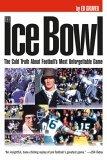
The Ice Bowl

More about The Ice BowlI was inspired to read this by the weather conditions as the Packers host the 49ers in an NFC Wildcard game. It’s not quite as cold in 2014 as it was back in 1967, but it still very cold to be playing football outdoors!

I was 10 years old in 1967 and remember the Ice Bowl vividly. I like this book a lot: it’s not overly long, it discusses the 1967 season in some detail to provide context, and best of all, it has diagrams of some of the key plays during the game to go along with the narrative. I’ve found a couple of minor inaccuracies with some of the background information, but it’s still a great read.

Russia Against Napoleon

More about Russia Against NapoleonThis is a comprehensive overview of the Russian struggle against Napoleon. The author begins with the political maneuverings after the Peace of Tilsit in 1807 and carries through to the Allied entrance into Paris in 1814. The main focus is on Russian political and military affairs beginning with the invasion by Napoleon in 1812 and continuing on to the peace of 1814.

Most people are familiar with the 1812 campaign, but the author spends time dissecting why Napoleon’s invasion failed, and shows that it was not a matter of chance and a severe winter; instead the Russians had planned carefully on how best to defeat the French. What is interesting to me is the author’s discussion of the 1813 and 1814 campaigns; both in terms of the politics of the alliance and the actual military events. This is often glossed over, beyond a brief mention of the battle of Leipzig. The French did not collapse after the failed invasion of Russia, and much political skill was required by Tsar Alexander to coax the Austrians into the Russian and Prussian alliance. Despite the failure of the 1812 campaign, the defeat of the French was by no means a foregone conclusion.

The internal Russian politics both inside and outside of the army are also discussed at length. The triumph of Russian arms is in no small part a triumph for Alexander and his vision of how to best fight the French and ensure peace for Russia.

As an aside, it is refreshing to read a military history where logistics are discussed at length. The Russian supply system was one of the crucial factors in the eventual victory of the Allies.

If Kennedy Lived

More about If Kennedy LivedI really enjoyed this book; it’s an alternative history based on the premise that JFK survived the assassination attempt in Dallas on November 22, 1963. It is an interesting exploration of the politics of the early and middle 1960’s; including a few scandals which were buried after Kennedy’s death. What people tend to forget is that JFK was a very cautious politician – he was keenly aware of his narrow mandate and never really acted unless he had to. Also, unlike his youngest brother, JFK was not particularly liberal.

Of course the most interesting question is what would have happened in terms of the US involvement in Vietnam, which the author handles in a believable way and shows an interesting connection to the civil rights movement. Granted, we’ll never know what really would have happened, but it’s a plausible story.

Jeff Greenfield is a well-known political writer and is the author of Then Everything Changed which is a collection of alternate history stories. He does a good job with this book, but once we get to 1966 or so, things start to drift a bit. Part of that is of course that the big questions have been answered by then. The book ends right before the presidential election in November 1968. If you like alternative histories, this is a good one.

Gettysburg Address

Abraham Lincoln, November 1863

Abraham Lincoln, November 1863

Four score and seven years ago our fathers brought forth on this continent, a new nation, conceived in Liberty, and dedicated to the proposition that all men are created equal.

Now we are engaged in a great civil war, testing whether that nation, or any nation so conceived and so dedicated, can long endure. We are met on a great battle-field of that war. We have come to dedicate a portion of that field, as a final resting place for those who here gave their lives that that nation might live. It is altogether fitting and proper that we should do this.

But, in a larger sense, we can not dedicate — we can not consecrate — we can not hallow — this ground. The brave men, living and dead, who struggled here, have consecrated it, far above our poor power to add or detract. The world will little note, nor long remember what we say here, but it can never forget what they did here. It is for us the living, rather, to be dedicated here to the unfinished work which they who fought here have thus far so nobly advanced. It is rather for us to be here dedicated to the great task remaining before us — that from these honored dead we take increased devotion to that cause for which they gave the last full measure of devotion — that we here highly resolve that these dead shall not have died in vain — that this nation, under God, shall have a new birth of freedom — and that government of the people, by the people, for the people, shall not perish from the earth.

Abraham Lincoln
November 19, 1863
Gettysburg, Pennsylvania