Category Archives: Books

Review: Wisconsin’s Historic Courthouses

Wisconsin's Historic CourthousesWisconsin’s Historic Courthouses by L. Roger Turner
My rating: 4 of 5 stars

I liked this book; it’s a fun read if you’re familiar with Wisconsin’s counties. The book is arranged by county (in alphabetical order), and for each county there is a description of the historic courthouse and some information about the history of the courthouse, or courthouses as the case may be. There are also some nice photographs or other illustrations of the courthouse for each county.

There are a couple of things to be aware of in reading this book, however. First it is a little dated at this point. Some of the courthouses listed in the book are no longer in use; not surprising considering that the book was published in the 1990s. I found that some of the entries are much more detailed than others. And for some of the short entries it almost seems like the authors did not actually visit the county but instead worked from secondary sources. I also think it would have helped to provide little more detail about the current courthouses in those counties which had already replaced their older buildings.

Overall I really enjoyed this book. It’s a fun book to have around and it’s a pretty good reference book too. If you’re interested in learning about one or more of the county courthouses of Wisconsin, this book is a good place to start.

Review: Midnight in Europe

Midnight in Europe (Night Soldiers, #13)Midnight in Europe by Alan Furst
My rating: 4 of 5 stars

Midnight in Europe is another volume in the series of historical spy novels by Alan Furst that began with Night Soldiers. It is set in Paris in 1937 and 1938 and the major focus of the action is the Spanish Civil War. The main character, Cristián Ferrar, is a Spanish lawyer for an international law firm, who has ties to the Republican side of the Civil War. Quite a lot of the action involves trying to ship arms and ammunition to the beleaguered Republican force in Spain who are losing their struggle with Franco’s Nationalist army. And of course there is espionage, love affairs and a visit to the Brasserie Heininger, all things we have come to expect from Mr. Furst.

I like this book; it’s a good, enjoyable read. However, in my opinion this is not the best book in the series. For one thing, it’s not as tightly plotted as some of the previous books. And in some places I had the feeling that the author was just going through the motions. Still I enjoyed reading the book and I’m looking forward to reading the next volume in the series.

Review: Weimar Germany

Weimar Germany: Promise and TragedyWeimar Germany: Promise and Tragedy by Eric D. Weitz
My rating: 4 of 5 stars

This is an interesting book covering the history of Germany from the revolution in November 1918 to the appointment of Hitler as chancellor in January 1933. The book has an unusual structure: the author has divided the book into chapters that focus on various aspects of the Weimar society, such as art or architecture or the economy, instead of arranging things in a strictly chronological order. This has the advantage that each chapter is somewhat independent of the others, so it’s easy to read a chapter and put the book down for a while. On the other hand is does make it somewhat more difficult to gain an idea the timeline of the Weimar Republic. For example, although the Kapp Putsch is mentioned several times in the book, there is a no discussion of the Putsch itself.

Overall I enjoyed reading this book. It covers in detail a lot of things that are usually only sidebars in the story of the Weimar Republic; most histories focus on the political history of the Republic. However I think that it would be helpful to be somewhat familiar with the chronology and politics of the Weimar Republic before reading this book.

Review: Year Zero

Year Zero: A History of 1945Year Zero: A History of 1945 by Ian Buruma
My rating: 4 of 5 stars

This book is the story of what happened when World War II ended. It covers events around the world but is limited in focus to what happened in 1945, although events in the future, such as the Cold War and the founding of the state of Israel, are sometimes discussed in relation to what happened in 1945. This is a very ambitious goal, and the book for the most part succeeds, but it is hard to develop any sense of a narrative with such a broad scope.

Each chapter in the book focuses on a particular topic, such as hunger, sending the millions of displaced people home, or the founding of the United Nations and tries to explain what happened and why. This organization of the book again tends to work against a narrative, but it’s probably the only way to cover such topics on a global scale.

One of the things that helps bring the story back to a human scale is that the author relates the stories of his parents. His father was a Dutch law student who wound up in a labor camp in Germany and was in Berlin at the end of the war. His mother was a school girl in Great Britain and her story sheds light on the plight of the British, who were among the victors in 1945 but who had to endure rationing for several years after the war as their price for victory.

As I said, it’s a very interesting book and well worth reading. For me it fills a gap between the end of hostilities in Europe and Asia and the post-war world.

Review: The Other Side of Silence

The Other Side of Silence (Bernie Gunther, #11)The Other Side of Silence by Philip Kerr
My rating: 4 of 5 stars

This is the eleventh book in the Bernie Gunther series by Philip Kerr. It’s not my favorite in the series but it is a good read and I enjoyed it. Briefly the action begins in 1956 on the French Riviera, much as it did in the previous novel “The Lady from Zagreb.” Bernie is a concierge at a hotel and spends some of his time playing bridge. This leads to a meeting with W. Somerset Maugham and Bernie becomes involved with a blackmail attempt which may have implications for the British Secret Service.

There may be a few very mild spoilers below, so turn back now if you must.

The blackmailer, or at least the contact for the blackmailer, is well-known to Bernie and we learn about their relationship in flashbacks to 1938 and the winter of 1944-45. The 1938 episode relates to the scandal involving Werner von Fritsch who was then the Commander-in-Chief of the German Army. The later flashback places Bernie in Koenigsberg before the Russian winter offensive of January 1945. This touches on the sinking of the Wilhelm Gustloff and also the mystery of the Amber Room which disappeared in 1945 and has not been recovered.

Overall, a solid outing for Bernie, but it’s just not as good as some of the previous novels. The blackmail plot is good and I was a bit surprised at how it was resolved.

As always, there seems to be a minor historical nit to pick. In this case it concerns an East Prussian lodge that supposedly was built for Frederick III of Prussia in 1690, the son of Frederick the Great. First, Frederick the Great died in the 1780s, and second, he had no children. The real Frederick III reigned for a few months in 1888 after the death of his father and before his own death from cancer. He was succeeded by his son Wilhelm II.

Review: A King’s Ransom

A King's Ransom: A NovelA King’s Ransom: A Novel by Sharon Kay Penman
My rating: 5 of 5 stars

“A King’s Ransom” is the final book in Sharon Kay Penman’s series on the Angevin kings of medieval England. This volume picks up the story of Richard I after the Third Crusade (see “Lionheart” for the first part of Richard’s reign including the Crusade). The Crusade ended with some very bad feeling among the Christian forces – Phillip II of France left early due to conflicts with Richard. There were also conflicts between Richard and some of the German leaders. So when it was time for Richard to return to England he faced a long journey through potentially hostile territory. And the story of his return home is the first part of this book. Without getting into spoilers, if you remember your history, Richard is captured and imprisoned in Germany. His mother Eleanor of Aquitaine raises the massive ransom that is paid to the Holy Roman Emperor to set Richard free.

The second part of the book is focused on Richard’s campaigns to restore his authority over his domains. During his absence, his younger brother John had worked with Phillip to undermine Richard. Richard has to deal with John’s treachery, and must also campaign almost continually against Phillip to roll back the French territorial gains that occurred during Richard’s absence.

The book is well-written and an engrossing read, something that I have come to expect from this author. She does an excellent job of story telling. And she has clearly done her historical research. I always enjoy her Author’s Note at the end of the book, where she explains which minor characters are historical figures and which are fictional, and what parts of the story are history and which are invented or modified.

If you like historical fiction, I think you will like this book. I highly recommend it.

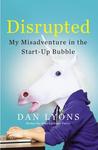
Disrupted: My Misadventure in the Start-Up Bubble

Disrupted: My Misadventure in the Start-Up BubbleDisrupted: My Misadventure in the Start-Up Bubble by Dan Lyons
My rating: 2 of 5 stars

I have seriously mixed feelings about this book. On a couple of levels it works pretty well: as a journal of the “culture” of a typical startup company it is very amusing and pretty much on target. As an expose of the economics of the current start up bubble it is really very good – if you wonder how companies that never make a profit seem to generate enormous wealth for their founders and investors, the answer is here, at least in part.

However, this does not really work as a “fish out of water” tale where a 50-something journalist goes to work with a group of 20-somethings in the “frat house” culture of a tech start up. For one thing the author whines too much. For another, as one who had covered the tech industry as a journalist, it seems surprising that he is shocked by the culture he finds in his new job. I would not be surprised if he had in fact planned to write this book as soon as he started his new career.

As a sidenote, I too am a 50-something tech worker and most of the people I work with are much younger than myself. I have some amusing (and some sad) stories about working across the generational divide. But some of the best managers and coworkers I’ve had were much younger than I am.

View all my reviews

Deceived By Self

Deceived by SelfDeceived by Self by William Mitchell Ross
My rating: 3 of 5 stars

I liked this book; it’s a murder mystery set in Monroe Wisconsin. As a frequent visitor to Monroe, I enjoyed the setting quite a bit. I don’t want to get into any spoilers, but the reader does know who the murderer is for most of the book. However, I found it interesting to follow Detective Samantha Gates as she tries to put all of the pieces together.

The way the novel is structured is a little distracting at first: there are lots of short chapters and each chapter may be told from a different character’s perspective. This kind of narrative has advantages and disadvantages for me at least. It can be hard to get into the “flow” of the mystery, but on the other hand it’s easy to put the book down for a while and pick it up again without any loss in continuity.

It’s an enjoyable read and I recommend it.

View all my reviews

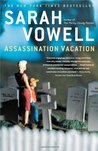
Review: Assassination Vacation

Assassination VacationAssassination Vacation by Sarah Vowell
My rating: 3 of 5 stars

“Assassination Vacation” is a re-telling of the stories of the assassinations of three US Presidents: Lincoln, Garfield and McKinley. As always the author does a good job of covering the facts, visiting the locations and explaining things to her readers.

I did like the book, but it’s just not quite as good as her later efforts. I think the basic problem is trying to link the three events over the course of 40 years or so. The assassinations just don’t have that much in common, except for the unfortunately Robert Todd Lincoln, so we really have three stories that are just not well-connected. It’s worth reading if you are interested in one of more of the presidents who were assassinated; but I’m not sure if it really appeals to the general audience. I enjoyed reading it, but your mileage may vary.

Review: Unfamiliar Fishes

Unfamiliar FishesUnfamiliar Fishes by Sarah Vowell
My rating: 4 of 5 stars

“Unfamiliar Fishes” is focused on the history of Hawaii from roughly the time of the establishment of the unified kingdom of Hawaii to the overthrow of the constitutional monarchy and eventual annexation by the United States in 1898. It’s an interesting period of history and there are a lot of people involved, from the Hawaiian royal family, to the New England missionaries and their descendants, to Theodore Roosevelt and Alfred Thayer Mahan. The author does a god job of weaving together the many threads in the story of how Hawaii became part of the United States.

I found the story very interesting and well-told. I’ve read a bit about this over the years, but this is a really good one volume account that covers a somewhat obscure part of history. Certainly the Kingdom of Hawaii is not as well known as, say, the Republic of Texas. But it is an interesting story of how things can start with the best intentions and yet lead to a very unjust result. The author make sa good effort to explain how each group, ethnic, religious or otherwise viewed itself and how they all interacted. In particular, I found the change in the missionary community very interesting. While the original missionaries worried about saving souls and expanding God’s kingdom on earth, their children and grandchildren seems to be much more concerned about profit and loss, and eventually led the movement to overthrow the monarchy.

It’s definitely a good read; very enjoyable and I learned some things too. I recommend this book.

View all my reviews