Author Archives: joe

It is what it is

I came across this poem a few days ago while looking up the origin of the now common
saying “it is what it is.” In the course of my search I found this poem by Erich Fried, which is apparently the first occurrence of the saying (though in German of course) and I enjoyed it. The poem was originally published in 1983. I’ve added my English translation below.

Was es ist

Es ist Unsinn
sagt die Vernunft
Es ist was es ist
sagt die Liebe

Es is Unglück
sagt die Berechnung
Es ist nichts als Schmerz
sagt die Angst
Es ist aussichtslos
sagt die Einsicht
Es ist was es ist
sagt die Liebe

Es ist lächerlich
sagt der Stolz
Es ist leichtsinnig
sagt die Vorsicht
Es ist unmöglich
sagt die Erfahrung
Es ist was es ist
sagt die Liebe

Erich Fried: Es ist was es ist. Liebesgedichte, Angstgedichte, Zorngedichte. Wagenbach, Berlin 1996

English Translation
What it is

It is nonsense
says reason
It is what it is
says love

It is misfortune
says calculation
It is nothing but pain
says fear
It is hopeless
says insight
It is what it is
says love

It is ridiculous
says pride
It is careless
says caution
It is impossible
says experience
It is what it is
says love

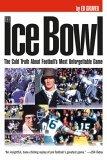
The Ice Bowl

More about The Ice BowlI was inspired to read this by the weather conditions as the Packers host the 49ers in an NFC Wildcard game. It’s not quite as cold in 2014 as it was back in 1967, but it still very cold to be playing football outdoors!

I was 10 years old in 1967 and remember the Ice Bowl vividly. I like this book a lot: it’s not overly long, it discusses the 1967 season in some detail to provide context, and best of all, it has diagrams of some of the key plays during the game to go along with the narrative. I’ve found a couple of minor inaccuracies with some of the background information, but it’s still a great read.

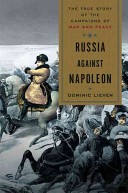
Russia Against Napoleon

More about Russia Against NapoleonThis is a comprehensive overview of the Russian struggle against Napoleon. The author begins with the political maneuverings after the Peace of Tilsit in 1807 and carries through to the Allied entrance into Paris in 1814. The main focus is on Russian political and military affairs beginning with the invasion by Napoleon in 1812 and continuing on to the peace of 1814.

Most people are familiar with the 1812 campaign, but the author spends time dissecting why Napoleon’s invasion failed, and shows that it was not a matter of chance and a severe winter; instead the Russians had planned carefully on how best to defeat the French. What is interesting to me is the author’s discussion of the 1813 and 1814 campaigns; both in terms of the politics of the alliance and the actual military events. This is often glossed over, beyond a brief mention of the battle of Leipzig. The French did not collapse after the failed invasion of Russia, and much political skill was required by Tsar Alexander to coax the Austrians into the Russian and Prussian alliance. Despite the failure of the 1812 campaign, the defeat of the French was by no means a foregone conclusion.

The internal Russian politics both inside and outside of the army are also discussed at length. The triumph of Russian arms is in no small part a triumph for Alexander and his vision of how to best fight the French and ensure peace for Russia.

As an aside, it is refreshing to read a military history where logistics are discussed at length. The Russian supply system was one of the crucial factors in the eventual victory of the Allies.
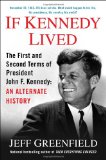
If Kennedy Lived

More about If Kennedy LivedI really enjoyed this book; it’s an alternative history based on the premise that JFK survived the assassination attempt in Dallas on November 22, 1963. It is an interesting exploration of the politics of the early and middle 1960’s; including a few scandals which were buried after Kennedy’s death. What people tend to forget is that JFK was a very cautious politician – he was keenly aware of his narrow mandate and never really acted unless he had to. Also, unlike his youngest brother, JFK was not particularly liberal.

Of course the most interesting question is what would have happened in terms of the US involvement in Vietnam, which the author handles in a believable way and shows an interesting connection to the civil rights movement. Granted, we’ll never know what really would have happened, but it’s a plausible story.

Jeff Greenfield is a well-known political writer and is the author of Then Everything Changed which is a collection of alternate history stories. He does a good job with this book, but once we get to 1966 or so, things start to drift a bit. Part of that is of course that the big questions have been answered by then. The book ends right before the presidential election in November 1968. If you like alternative histories, this is a good one.

Door County Century Results

Almost every year since 2009, I’ve taken part in the Door County Century bike ride. This is held in September on the weekend after Labor Day. The bike expo is on Saturday and the ride itself is on Sunday. I try to take the Friday before and the Monday afterward off to make it a long weekend event. It’s very well organized and a lot of fun. And it has become more popular each year that I’ve taken part – thankfully we’ve always had good weather.

Typically there are four routes offered: 30, 50, 70 and 100 miles. The routes are set up so that you can turn off onto a shorter route if the weather is bad or you just don’t feel like riding a longer distance.

In 2010 the route changed: the ride now begins and ends at the Door County fairgrounds in Sturgeon Bay. Previously, the ride began and ended at the school in the town of Institute. The change was a good one: the fairgrounds can accommodate the larger crowds, and there is a lot more parking available.

I missed the event in 2016 because of a prior commitment on that Sunday. And in 2020 the entire event was canceled because of the Covid19 pandemic.

If you look at the results in the table, you’ll notice that up until 2014, I ride the 100 mile route in odd numbered years, and in the even numbered years I do the 70 mile route. I hadn’t really planned it this way, it’s just the way things worked out. In 2014 I finally broke the pattern and did the full 100 mile route in an even numbered year.

Door County Century Results

DateDistance
(miles)
TimeAvg Speed
(mph)
Bike
2009-09-13100.87:54:0012.8Trek 7100
2010-09-1270.55:22:2813.1Trek 7100
2011-09-11100.07:39:5313.0Trek 7.2 FX
2012-09-0970.75:11:1013.6Trek 7.2 FX
2013-09-08100.07:25:2313.5Trek 7.2 FX
2014-09-07100.07:36:5213.1Trek 7.2 FX
2015-09-1335.42:45:3412.8Trek 1.1
2017-09-1050.64:04:5912.4Trek 1.1
2018-09-0970.05:50:0512.0Trek 1.1
2019-09-0871.15:38:2112.6Trek 1.1
2021-09-1251.44:14:0312.1Trek 1.1
2022-09-1131.12:37:3111.8Trek 1.1
2023-09-1050.54:23:1611.5Trek 1.1


Race Results Middleton GNF

The Middleton Good Neighbor Festival is held every year on the weekend before Labor Day. Starting in 2004 a run / walk has been offered as part of the festivities on Saturday morning. In 2004 it was more of a trail run: we started near the high school and ran on the trail along the Pheasant Branch Creek. It was a 3 mile out and back course.

The next year the run moved to a new route, starting and ending at Capital Brewery, which made the logistics much easier for the organizers. The new course length was 5 K. The course was mostly on city streets, though it follows parts of the trails around Tiedeman’s Pond and Stricker’s Pond. While it is fairly flat in the first two miles, the course does go up the big hill to Quarry park (and back down!) in the last mile.

The course has varied slightly over the years due to road construction, and one year, due to high water in Tiedeman Pond which submerged part of the trail. In 2014 the race started and ended in Firemen’s Park because of road construction on Terrace Avenue near the brewery. This new course was used again in 2015, though the start was moved because the course was somewhat short in 2014. The new course was used again in 2016, so it appears that the change is permanent. So we no longer “replenish fluids” at the brewery, but now we gather in the Youth Hockey / Capital Brewery beer tent after the race.

In 2018 the 5 K course had to be changed due to damage to the Pheasant Branch trail and pedestrian bridges from the Great Flood of August 2018. I actually like the new course better mainly because it goes through a neighborhood that I used to live in. The change has become permanent; the same course was used in 2019 and 2021, and a slightly modified version was used for the virtual race in 2020.

Middleton GNF Run Results

YearTimeDistance
200429:193 miles
200531:205 K
200632:005 K
200728:405 K
200828:445 K
200929:005 K
201029:545 K
201131:005 K
201230:285 K
201326:285 K
201426:525 K
201526:315 K
201628:085 K
201729:555 K
201829:105 K
201929:025 K
202031:015 K
202129:295 K
202330:255 K
202432:445 K
202532:455 K

Race Results Lodi Library Run

The Lodi Library Run is a 5 K race which is held in during with Susie the Duck days in Lodi which is typically the second weekend in August. The race begins and ends at the elementary school (the old high school) on the east side of town, just off Highway 60.

I ran the Library Run for the first time in 1996, but I don’t have a record of my time for either 1996 or 1997. The most memorable race was in 1998. I ran along with then Governor Tommy Thompson. He was running for re-election and a large number of young people in white “Team Tommy” shirts ran with him. In fact one of his campaign commercials features the governor running on the road through the cornfield just before the first water stop on the course.

This is one of my favorite races because it is a small town race for a good cause. It is very well organized and there is only one big hill on the course. It’s in the first mile, but then it’s downhill or pretty flat for the rest of the race.

The course is supposedly a 5 K, though I suspect that it might be slightly short. There were a few years when the course had to be slightly modified due to road construction; this would be back around 2001 or 2002 I think.

Lodi Library Run Results

YearTimeDistance
199826:125 K
199924:125 K
200025:415 K
200126:345 K
200227:585 K
200325:105 K
200425:075 K
200526:195 K
200629:245 K
200728:475 K
200830:295 K
200926:485 K
201030:455 K
201129:235 K
201325:415 K
201426:045 K
201527:155 K
201727:435 K
201827:245 K
202230:025 K
202331:155 K
202431:595 K
202533:455 K